In today’s rapidly evolving world, addressing environmental concerns is more critical than ever. One of the key areas of focus in the battle against climate change is managing greenhouse gas emissions (GHG). To effectively manage emissions, it’s essential to understand the concept of “scopes” in emissions. In this article, we will delve deep into what scopes in emissions are and why they matter.
What are Scopes in Emissions?
Scopes in emissions refer to a classification system used to categorise greenhouse gas emissions based on their source and control. These scopes were developed by the Greenhouse Gas Protocol, a widely recognized standard for greenhouse gas accounting and reporting.
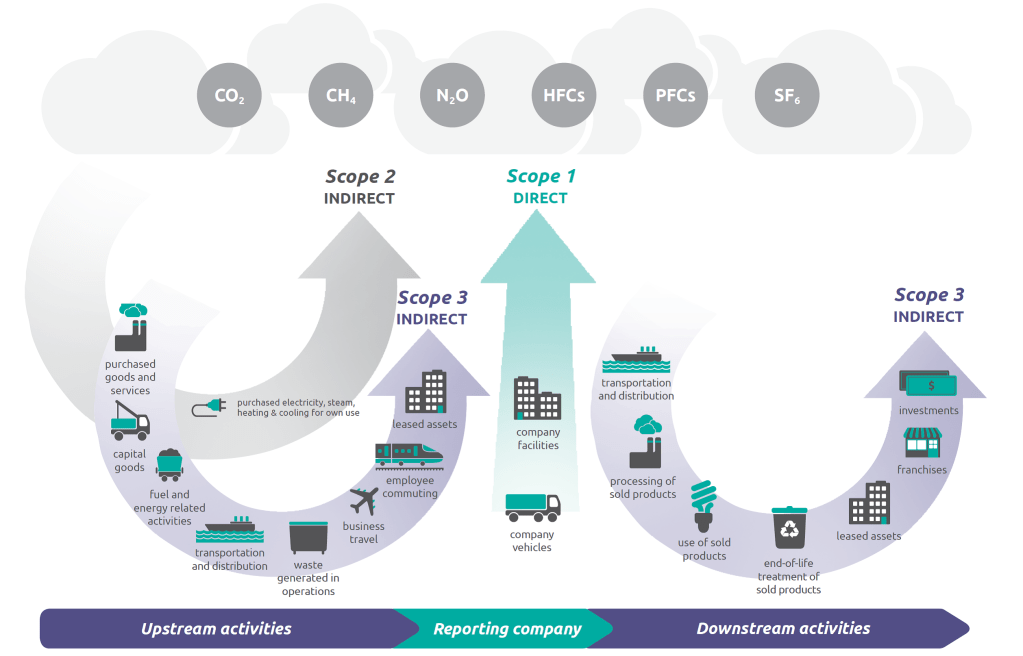
The three scopes are:
- Scope 1 Emissions:
- Scope 1 emissions encompass direct greenhouse gas emissions that an organisation generates from its own operations. These emissions result from activities like burning fossil fuels for heating, running company-owned vehicles, and operating manufacturing processes.
- Scope 2 Emissions:
- Scope 2 emissions encompass indirect emissions produced from the generation of purchased energy. This includes electricity, heat, or steam purchased by the organisation from external sources, such as utility companies. Organisations can influence Scope 2 emissions by choosing to use renewable energy sources or improving energy efficiency ( for instance, placing solar panels on-site).
- Scope 3 Emissions:
- Scope 3 emissions cover all other indirect emissions that result from an organisation’s activities but occur from sources not owned or controlled by the organisation. This is the most extensive and often the most challenging scope to measure, as it includes emissions from the entire supply chain, business travel, and other sources that are not directly under the organization’s control.
Why Scopes in Emissions Matter?
Understanding the different scopes in emissions is essential for several reasons:
- Comprehensive Reporting: By categorising emissions into different scopes, organisations can provide a more comprehensive and transparent account of their environmental impact. This enables stakeholders, including customers, investors, and regulatory bodies, to assess their sustainability efforts accurately.
- Goal Setting: Scopes in emissions help organisations set meaningful emissions reduction goals. By identifying which scopes are their primary sources of emissions, companies can focus their efforts on mitigating the most significant contributors to climate change.
- Supply Chain Management: Scope 3 emissions, which include supply chain-related emissions, highlight the importance of sustainable sourcing and supplier engagement. Companies can work with suppliers to reduce emissions throughout the value chain, promoting sustainability on a broader scale.
- Compliance and Regulation: Understanding emissions scopes is crucial for compliance with environmental regulations and reporting requirements. Many governments and industry groups require organizations to report their greenhouse gas emissions, often differentiating between scopes.
Conclusion
In the fight against climate change, understanding scopes in emissions is a fundamental step toward effective emissions management and sustainability. By categorising emissions into Scope 1, Scope 2, and Scope 3, organisations gain insight into the sources of their greenhouse gas emissions, allowing them to take targeted actions to reduce their carbon footprint. This not only benefits the environment but also enhances corporate transparency, reputation, and compliance with environmental regulations.
As the world continues to prioritise environmental responsibility and emissions reductions, organisations that grasp the concept of scopes in emissions and take meaningful actions to reduce their greenhouse gas emissions will be better positioned for a sustainable and prosperous future.

 Sustainable Crossroads